This story is from October 3, 2026. For the latest, see today's news.
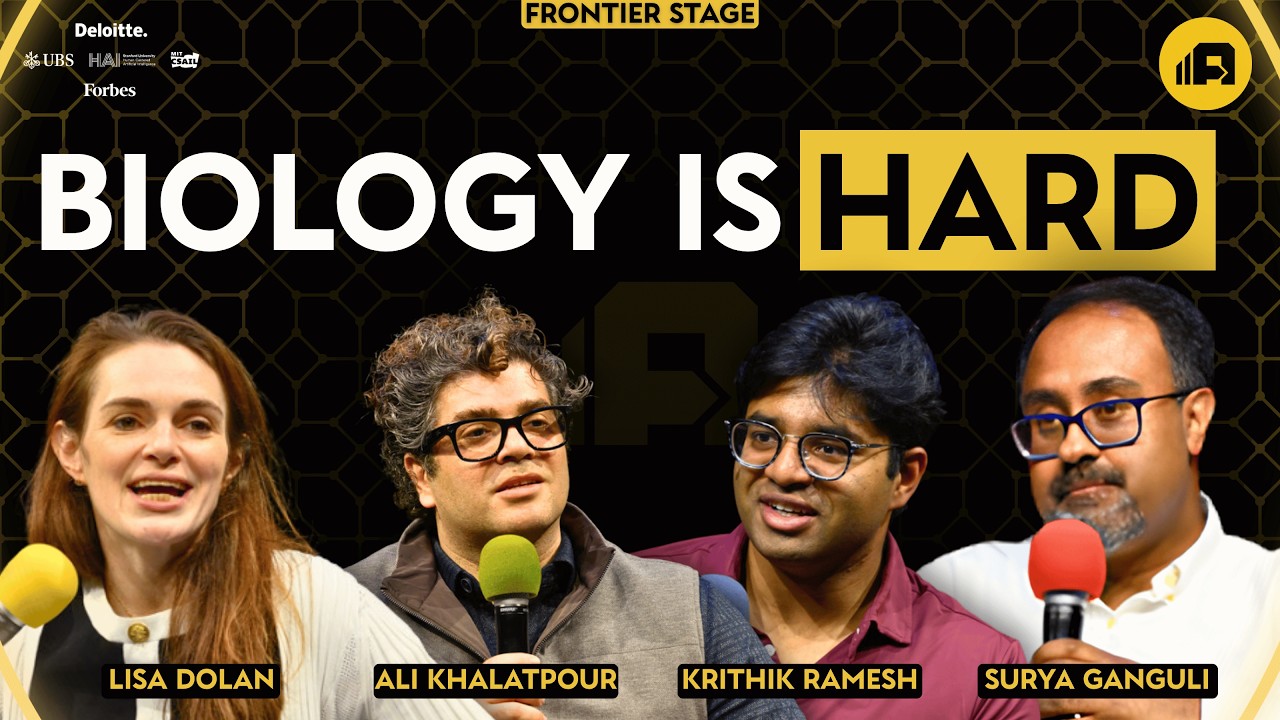
A panel of researchers and experts discussed why AI's success in benchmarks does not easily transfer to biological science and drug discovery. The conversation, recorded at the Imagination in Action Silicon Valley AI Summit at Google, covered how wet lab experiments validate AI-discovered drugs, the role of data movement between as a bottleneck, and why scaling approaches that work for language models do not map cleanly onto biology.
The panelists explored neuroscience, photonics, brain energy efficiency, and the practical challenges of manufacturing new medicines. They also discussed how interdisciplinary teams must combine biological data with AI, and touched on future breakthroughs in cells, materials, and consciousness. The panel concluded with advice for founders on what to build and how to rethink AI learning for scientific applications.
This is an AI-written summary. The original reporting belongs to Imagination in Action. How we write these · Spot a mistake?