This story is from October 8, 2026. For the latest, see today's news.
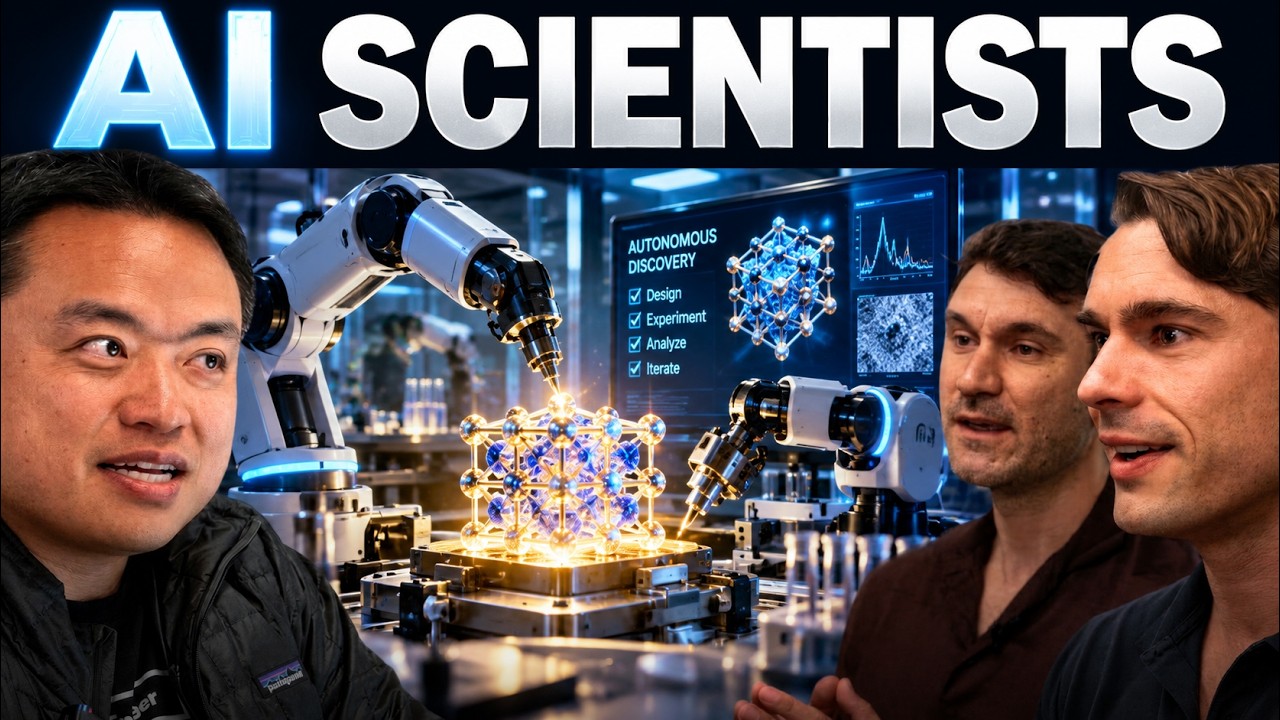
Periodic Labs is building AI systems designed to conduct scientific experiments autonomously, betting that the next frontier of AI discovery lies not in training on internet data but in letting models interact with the physical world. The startup's vision centers on "synthesis superintelligence": AI that reasons over noisy experimental data, learns from failed trials, and coordinates laboratory instruments as intelligent agents.
In a podcast episode, Periodic Labs co-founders Liam Fedus and Ekin Dogus Cubuk explain why scientific discovery differs fundamentally from math and coding problems. They discuss how reinforcement learning must account for uncertainty, measurement noise, and incomplete information when the environment is a physical laboratory. The company combines AI-powered materials characterization, simulations based on density functional theory, and high-throughput experimental systems to compress scientific trial-and-error.
Applications span materials with potential impact: room-temperature superconductors, advanced magnets, better batteries, and more efficient computing hardware. The founders argue that frontier AI models will still require experiments as ground truth, and that autonomous labs could transform how quickly new materials move from discovery to deployment.
This is an AI-written summary. The original reporting belongs to @LatentSpacePod. How we write these · Spot a mistake?