


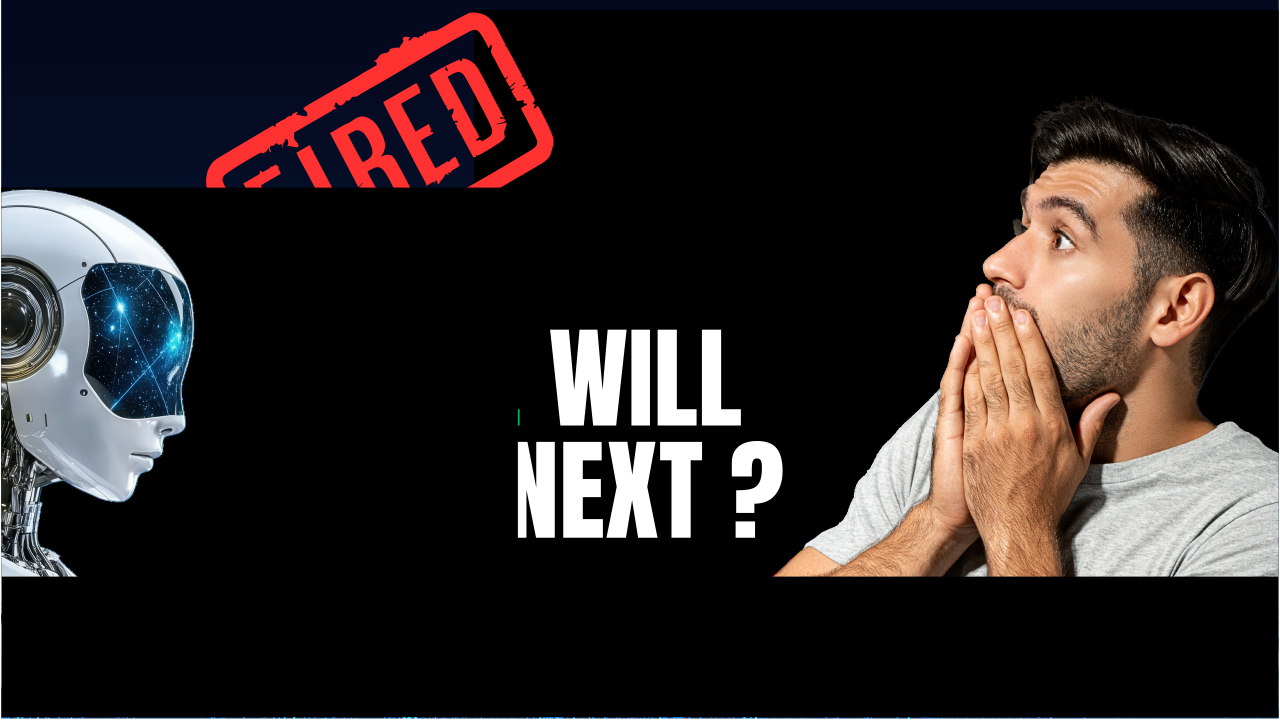

In 2026, the question that once sparked headlines and heated debates-“Is AI going to take your job?”-has evolved from a distant worry into a daily consideration for millions. As artificial intelligence continues to weave itself into the fabric of the modern workplace, the landscape of employment is shifting in ways both subtle and seismic. But beyond the headlines and fearmongering, what is the reality of AI’s impact on jobs today? Are we staring down unemployment lines or embracing new opportunities? This article peels back the layers of hype and speculation to reveal what’s actually happening in 2026, offering a clear-eyed view of how AI is reshaping work, careers, and the future of human productivity.
The Evolving Interface Between AI Capabilities and Human Roles in the Modern Workplace
Key ways AI is reshaping-but not erasing-work roles today:
- Co-piloting tasks: AI acts as a dynamic collaborator, enhancing decision-making rather than dictating it.
- New skill demands: Workers increasingly need AI literacy alongside deep domain knowledge.
- Role hybridization: Job titles evolve to reflect a blend of technical oversight and interpersonal skills.
- Focus shift: Emphasis moves from task completion to creativity, empathy, and strategic thinking.
| Industry | AI Function | Human Role Evolution |
|---|---|---|
| Finance | Fraud detection & risk modeling | Strategic oversight & ethical governance |
| Education | Personalized learning analytics | Facilitation & mentorship |
| Manufacturing | Predictive maintenance | Technical troubleshooting & innovation |
Adapting Career Strategies to Leverage AI as a Collaborative Asset Not a Competitor
In the rapidly evolving job landscape of 2026, professionals who view AI as a collaborator unlock new dimensions of creativity and efficiency. Rather than perceiving AI as an adversary, envision it as an extension of your cognitive toolkit-one that excels at handling repetitive, data-intensive tasks while you focus on strategic thinking and emotional intelligence. For example, in marketing, AI can analyze vast customer datasets to identify emerging trends, but crafting the narrative and building genuine brand loyalty remain firmly human strengths. Embracing this symbiosis means refining your skills to complement AI’s prowess:
- Developing decision-making skills informed by AI-generated insights
- Enhancing interpersonal communication where AI’s understanding remains limited
- Innovating in interdisciplinary fields by combining AI capabilities with human intuition
Consider the medical diagnostics sector, where AI-powered tools analyze imaging data with unmatched speed and accuracy. Yet, the interpretation of results and empathetic patient care require human judgment. The real competitive advantage comes from professionals who can navigate this hybrid environment-those who orchestrate AI’s capabilities while applying nuanced, context-aware interpretations. Below is a snapshot of how various industries leverage AI-human collaboration to reshape traditional roles:

| Industry | AI Role | Human Role | Outcome |
|---|---|---|---|
| Finance | Risk analysis and fraud detection | Client advisory and ethical judgement | Optimized decision-making |
| Education | Personalized learning analytics | Mentorship and emotional support | Enhanced student engagement |
| Creative Arts | Generating draft content and patterns | Artistic direction and storytelling | Novel creative expressions |
The Conclusion
As we stand at the crossroads of 2026, the question of whether AI will take your job no longer demands alarm but invites curiosity. The truth lies not in a looming takeover but in a dynamic partnership-where human ingenuity meets machine efficiency. While some roles evolve or fade, new opportunities and collaborations arise, redefining what work means in this new era. Embracing this transformation with openness and adaptability is less about fearing displacement and more about crafting a future where technology amplifies, rather than replaces, our unique human potential. The story of work is not ending; it’s simply changing chapters-are you ready to turn the page?